

Used Robot File Maintenance: Review Look-Alike Names
2026-11-01
Used Robot File Maintenance: Review Look-Alike Names
A used robot document exchange contains attachment names that look the same to a reviewer, yet a receiving system does not match them. The maintenance task is to clarify the name comparison before declaring that a file is missing. This fictional account concerns document labels only. It publishes no real attachment names, changes no filesystem and makes no claim about the equipment described by the documents.
Preserve the names as received
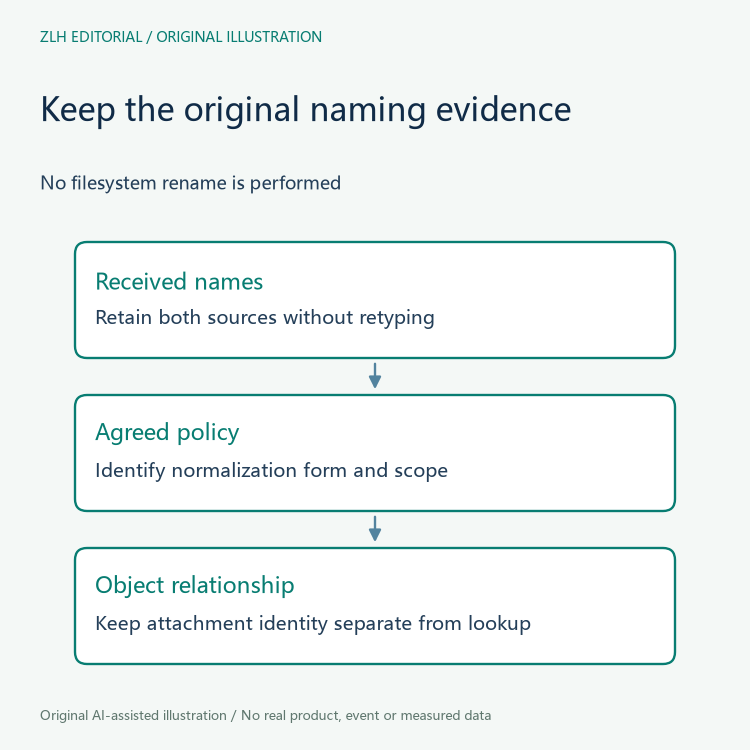
Begin with the original attachment listing and the actual mismatch observation. A screenshot can show that two labels look similar, but it does not expose the underlying character sequences. If the reviewer has not obtained those sequences through an authorized channel, state that limitation. Do not retype the label and treat the retyped version as the received text.
Imagine that the sender's archive list and the recipient's document index display nearly identical names. Keep the two sources separate. A name may have passed through an export or display process before it reached the index. The record should identify any known transformation rather than assume that both sides retained exactly the same text.
The visual concern also should not become an immediate file-identity conclusion. Similar names do not prove equal contents, and a name mismatch does not prove different contents. Ask the responsible parties which object each label is meant to identify. That relationship is necessary even if a text-comparison question is later resolved.

Normalization addresses defined equivalence relationships
Unicode Standard Annex 15 distinguishes canonical and compatibility equivalence and describes normalization forms. This gives the maintainer a precise reason why visually familiar text can require more context than an image of the name. It is not a rule that every look-alike character sequence is equivalent or that all filenames should be transformed in the same way.
The responsible implementer can explain the name policy used by the exchange. If normalization is part of that policy, record which form and which stage applies it. Do not choose a stronger transformation merely because it makes more names compare alike. Compatibility-related changes can have implications that the business owner has not agreed to.
The Python unicodedata reference provides normalization operations for forms including NFC and NFD. This is a concrete example of implementation support, not evidence that the recipient uses Python or that the affected names were normalized. No comparison is run in this article, and no sample result is supplied as a substitute for the actual exchange.
Other causes of a mismatch may remain relevant after normalization is understood. The actual application could use another naming rule, or the materials could refer to different objects. Those are investigation questions. Do not announce a Unicode cause merely because the symptom resembles an example from documentation.
Agree a comparison policy without overwriting the evidence
If the parties decide to adjust how names are indexed, retain the received form and the comparison representation separately where the authorized workflow requires them. A normalized lookup key is not automatically a replacement for the displayed original label. The maintenance record should explain the distinction rather than make the delivery history look as though it never contained different sequences.
A filesystem rename would be a separate action with its own authorization and consequences. It should not be performed as an unrecorded side effect of an editorial investigation. This article proposes no rename, archive rewrite or broad deduplication. A coordinator can obtain a policy explanation before any technical change is considered.
Suppose the owner supplies a revised index that follows an agreed policy. Link it to the original mismatch and identify the affected entries. Do not merge documents solely because their comparison names now coincide. The object association and any duplicate-content decision still need their own evidence.
Recheck the name relationship and keep file identity separate
An authorized recheck can state which original sequences, policy and index were examined, and what comparison result was actually observed. If the policy is only documented but no implementation was checked, say so. If other names remain unexamined, keep that scope visible rather than claiming that the entire document collection has been reconciled.
The closing note should retain the received names, the agreed comparison explanation and the known relationship to the attachments. Where file identity remains uncertain, leave it pending. A successful lookup is valuable without being described as proof of document authenticity, equipment condition or ownership.
The original illustrations show conceptual labels without real customer files. Related material is available in the used robot transaction records section and the article index. Keeping visual appearance, character comparison and attachment identity distinct gives the next maintainer a useful account without erasing the original evidence.


