

Used Robot Records: Read Duplicate JSON Names Carefully
2026-11-02
Used Robot Records: Read Duplicate JSON Names Carefully
Duplicate JSON names can make a used-equipment record difficult to interpret even when a receiving program accepts the text. The reader must distinguish what the original representation contains from what a particular decoder returns. This practical article proposes a controlled document-reading lesson. It examines no transaction, runs no decoder, and supplies no invented equipment record. The goal is to identify a representation question before trusting a simplified view.
Preserve the original before describing the decoded view
Imagine an instructor preparing a small, noncommercial text example for discussion. Keep that original text separate from any later display of a decoded object. A view produced by a program is an interpretation step, not automatically a complete visual copy of every name-value pair in the source.
The learner should identify which artifact a statement concerns. Saying that a field appears once in a displayed object does not necessarily describe how often its name occurred in the original text. Ask the instructor to name the transformation between the supplied source and the view being discussed. This distinction matters before anyone discusses the meaning of the supposed equipment information.
Use neutral conceptual roles in the lesson instead of real seller details. There is no need to invent a transaction or a conflicting price to explain the mechanism. The exercise can ask what a decoder would need to document without providing an actual commercial example.

Read the interoperability guidance precisely
RFC 8259 says object member names should be unique and explains interoperability concerns when they are not. Its discussion describes differing receiver behavior. A reader should preserve that nuance instead of claiming that every implementation must reject the same text in the same way.
For the prepared exercise, ask why a sender and receiver need a shared expectation about names. Agreement about the file format’s general label is not enough if the parties assume different handling of repeated members. The learner should identify the behavior being relied upon.
The article does not decide which member represents a seller’s intention. That would require information about actual preparation and meaning. A structural issue can be identified without inventing the commercial truth that one of the repeated members supposedly expresses.
Separate a documented default from all possible decoders
The Python json documentation describes its default acceptance of repeated object names and use of the last corresponding value. This is a documented behavior of that implementation context, not a universal rule for every receiving system.
The same documentation describes object_pairs_hook, which can receive an ordered list of pairs while decoding an object. Its existence helps explain why an application’s chosen decoding route matters. The exercise does not supply a custom decoder or claim that a hook automatically implements a complete validation policy.
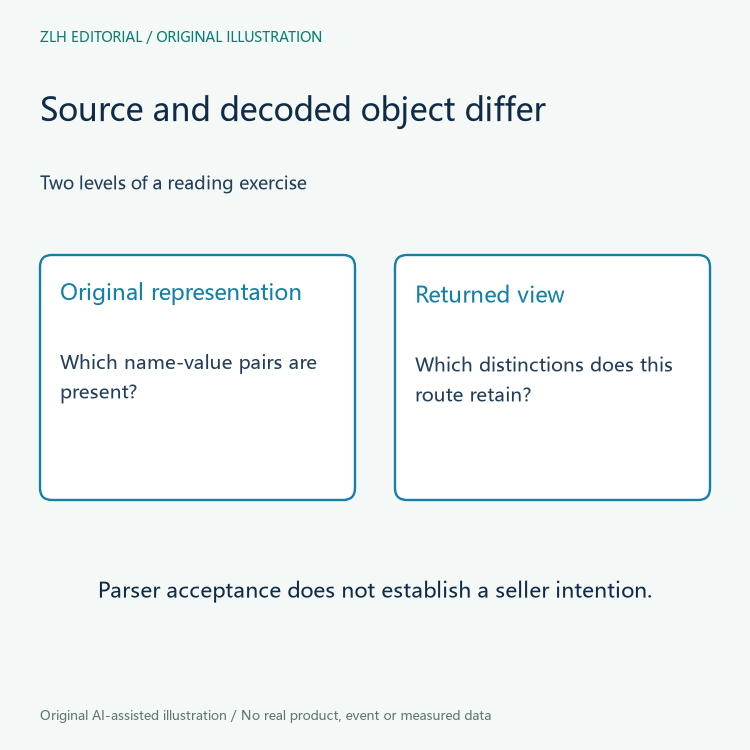
When a later authorized class uses an actual tool, record its implementation and relevant choices before describing its output. A pretty-printed object alone may not explain which source distinctions the chosen route retained. Keep the source available for that question.
Ask what the receiving application expects
A marketplace workflow may expect a record to have one unambiguous value for each named item. That expectation needs to be stated and checked in the actual application context. It should not be inferred from the fact that a demonstration parser accepts a document.
For the fictional lesson, formulate a question for the software owner: how does this receiving path handle repeated names, and where is that behavior explained? The question concerns the path that matters to the task. It does not call for trying many programs until one produces a preferred answer.
Keep any later correction separate from the original source. Rewriting a record to remove a repeated member involves a decision about meaning. A reading exercise should not silently make that decision on behalf of the person who prepared the material.
Review the account without adding transaction claims
Ask a colleague to identify the original text, the decoder behavior being discussed, and the receiving application’s unresolved expectation. If the explanation merges them, narrow it. A useful note can explain uncertainty without pretending that a used robot’s identity or terms have been verified.
No successful import or failed transaction is reported here. The proposed lesson improves how a reader approaches structured documents; it does not establish seller intent, equipment condition, or commercial agreement.
Related examples appear in our used-equipment document section and the reading directory. The two original illustrations contain no real object members, decoded output, seller data, or transaction findings. They keep a technical representation question separate from the facts a genuine trade review would need.


