

Used Robot XML Acceptance: Retain the Namespace Name
2026-11-02
Used Robot XML Acceptance: Retain the Namespace Name
A namespace name is part of identifying an element in an XML inventory handover. The short prefix visible in a document is not the whole identity, and a familiar local label can occur in more than one namespace. A buyer reviewing used-robot records should ask how the receiving system identifies the intended elements. This article proposes that acceptance conversation. It parses no inventory and verifies no equipment record.
Identify the inventory representation under review
Ask the supplier which XML document and schema context belong to the delivery. A short description such as robot inventory is not enough to establish the meaning of every element. The receiving reviewer needs the actual representation and the intended task.
The buyer should also ask whether a displayed field name comes directly from the XML or from a transformed view. A spreadsheet label can be useful to readers while concealing the structural identity used by the parser. Keep that transformation relationship explicit in the handover note. The owner of that view should be able to explain which source elements it includes and which relationships the presentation intentionally leaves out.
For the hypothetical review, no robot identifier or component entry is supplied. The acceptance checklist can request the relevant namespace context without fabricating a seller’s inventory. A complete-looking sample should not be mistaken for evidence about the equipment offered in a real transaction.
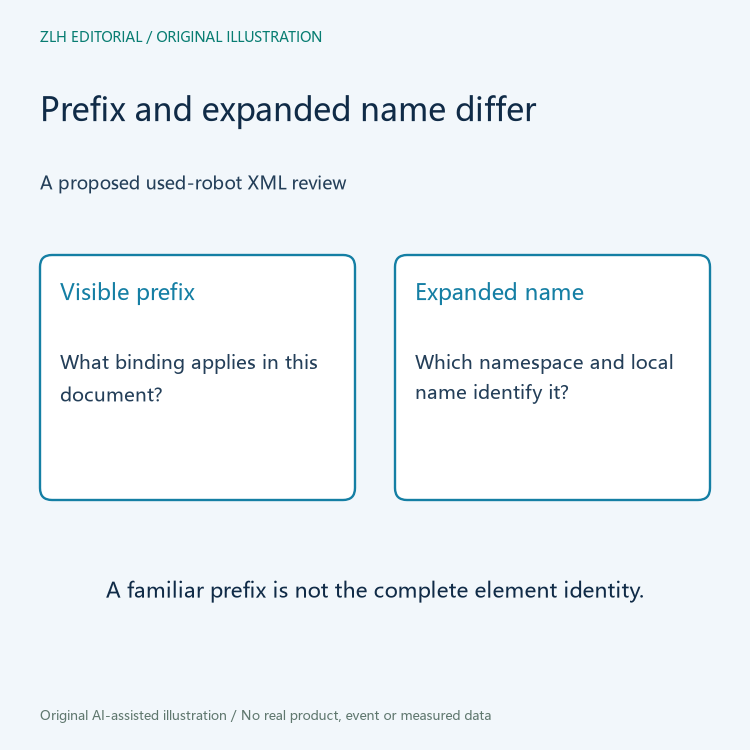
Read the expanded name rather than the prefix alone
The W3C Namespaces in XML specification defines an expanded name as a namespace name and local name pair. Prefixes provide a way to express namespace bindings in a document. The receiving explanation should preserve that distinction.
Ask the supplier which namespace name a relevant prefix is bound to in the actual document. A familiar prefix spelling should not be treated as proof of an element’s identity when its binding is unknown. Likewise, a changed prefix does not by itself explain whether the underlying expanded name changed.
The specification’s namespace mechanism addresses element and attribute naming. It does not establish that a supplied inventory statement is true or that the seller has authority over the described robot. Those are different questions requiring relevant evidence beyond XML structure.
Keep default namespace handling visible to the receiver
The Python ElementTree documentation describes namespaced tags being expanded to a form containing the namespace URI and local tag name. It also explains how a default namespace affects non-prefixed tags. That implementation context can matter when a reviewer searches a document.
Ask the supplier how the receiving parser or transformation identifies the intended elements. A query based only on a visible local label may not express the intended namespace-aware selection. The delivery should explain the actual method instead of leaving the buyer to reconstruct it from an empty-looking export.
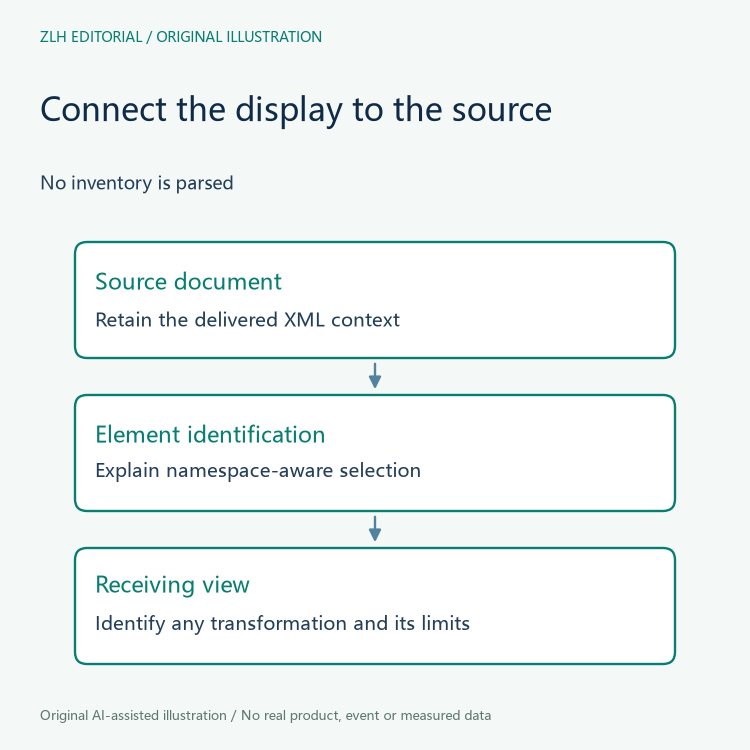
This article executes no query and reports no missing elements. Documentation of parser behavior is background for a later authorized review, not proof that a real conversion succeeded or failed. The actual document and selection context would need their own record.
Preserve ambiguity at the conversion boundary
If a supplier’s transformed view omits an expected entry, retain the source and the transformation description before assigning a cause. The difference could concern document contents, namespace handling, or another step. A blank result should not automatically become a statement that the robot lacks a component.
Ask whether the receiving process preserves distinctions between similarly named elements in different namespaces. If it intentionally merges them for display, the supplier should explain that decision and its limits. A convenient presentation is not necessarily a complete representation of the source structure.
Do not correct the source informally just to make an expected query work. A revised document or transformation should be identifiable as a revision. Preserving the original makes it possible to understand what the supplier actually delivered and what was later changed.
Accept a traceable element-identification account
The proposed handover should connect the source document, namespace bindings, intended expanded names, and receiving method. It should name the actual observation when one exists and keep unexamined relationships open. This gives another reviewer a route back from a display field to the XML context.
If a later delivery changes namespace usage or the transformation, ask which earlier checks need renewal. Retain the previous context with its own evidence. An unchanged local label should not silently carry an old acceptance statement into a different representation.
Related methods appear in our used robot records section and the article directory. The original illustrations contain no actual XML inventory, robot serial numbers, parser output, ownership evidence, or completed purchasing decision.


