

Pytest 9.2 News: Explain a Test Configuration Refusal
2026-11-03
Pytest 9.2 News: Explain a Test Configuration Refusal
A test attachment supplied with used robot software can fail to explain its own starting conditions. Before a buyer interprets a red result as an equipment problem, the attachment should show whether the intended test setup was accepted at all. The October pytest release offers a specific example of this distinction through changed handling of an invalid configuration path. It is software-tool news with a narrow relevance to the reading of transaction records.
A configuration refusal has a particular meaning
The pytest 9.2.0 release, dated October 27, 2026, states that the configuration-path option now reports a usage error for a missing path, a directory or a format without a supported loader. The note describes a refusal concerning the test tool's setup. It does not say that the software under test failed an assertion or that physical equipment failed an inspection.
The official configuration reference describes the supported configuration formats and their roles. Read that material for the applicable tool version when assessing a supplied explanation. This article neither supplies a test command nor recommends running an untrusted package. No seller archive, robot controller or actual test report has been opened for this discussion.

Ask what the attachment intended to examine
In a hypothetical transaction, a seller provides software files and a text document described as a test result. The buyer can ask the author to name the subject of the intended check. A check of a file-processing function, a check of an application interface and a demonstration involving equipment have different subjects. A single label such as tested cannot explain all three.
The requested explanation should identify the package edition and the conditions the author says were used. It should also distinguish the supplied files from observations actually collected. If the attachment records only a tool-starting error, preserve that limitation. It is not appropriate to fill the gap with an assumed list of tests or a statement that the equipment would have passed once the setup was corrected.
This distinction protects both sides from an unclear record. The seller can explain what was attempted without having that attempt enlarged into a claim about every delivered component. The buyer can identify the missing evidence without presenting a configuration problem as a proven hardware defect. A clear description is more useful than a general pass or fail label detached from its subject.
Keep the refusal beside the original setup description
If the report author later clarifies the configuration, keep the earlier output associated with the earlier attempt. A corrected explanation may support another review, but it should not overwrite the chronology of what was originally supplied. The recipient needs to know which result belongs to which conditions. This is a recordkeeping recommendation, not a requirement to execute software during a sale.
A release note can help explain why a tool may present a setup problem differently after an update. It is still the author's responsibility to identify the actual version and relevant configuration in the supplied record. The reader should not infer them solely from the appearance of an error message. If the version is unknown, document that uncertainty and request clarification.
Separate software observations from equipment claims
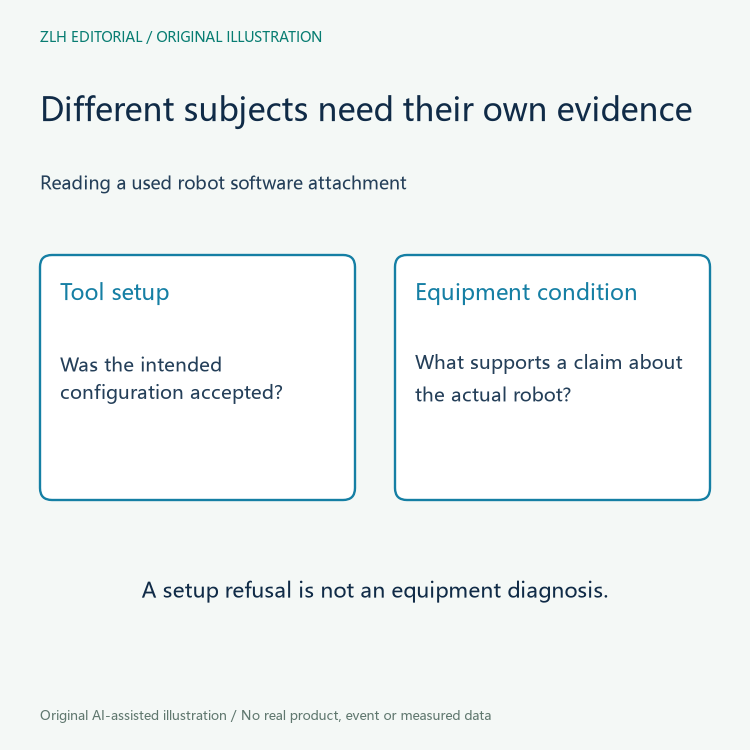
Even a completed software test concerns the behavior and conditions it examined. It does not automatically establish the physical state of a used robot, its ownership history or its suitability for another task. Those questions require their own materials and responsible reviewers. Keeping the subjects separate prevents a technical attachment from becoming a broad guarantee that its author did not demonstrate.
The transaction record can point to the software attachment while retaining the limits of its use. If the parties need an equipment demonstration, they should define that activity separately through the responsible professionals. This article offers no instructions for powering equipment, bypassing interlocks or changing a controller. Its subject is the interpretation of a software test setup refusal.
Use the October change to improve the question, not invent the answer
The release makes one setup condition more explicit. For a used-equipment reader, the benefit is a clearer question: did the intended check start with the configuration described by its author, and what evidence answers that? The answer must come from the supplied record or subsequent clarification, rather than from a generic description of pytest.
The original illustrations show relationships between documents, setup and conclusions. They contain no actual seller files or equipment results. Our used robot transaction collection discusses other evidence questions; the article directory provides the wider index. Preserve the precise subject of a refusal so that the next reviewer can ask for the missing material without inheriting an invented diagnosis.


