

Used Robot Attachments: Read Dotted TOML Key Scope
2026-11-04
Used Robot Attachments: Read Dotted TOML Key Scope
Used Robot Attachments can include small text descriptors that explain what a document package contains. If such a descriptor uses TOML, a dot in a key may be part of its structure rather than punctuation in an ordinary label. A reader who flattens every name into a spreadsheet heading can lose that distinction. The exercise here concerns an archived document descriptor, not machine settings, robot programming or a live transaction.
Declare the document format and version being read
The inspected TOML 1.0.0 specification distinguishes bare, quoted and dotted keys. Dotted keys join key components and can group related properties; a quoted component can itself contain a dot. This is a specific version of the format specification. It should not be presented as a claim that every attachment with a similar filename follows that version.
Start a reading note by recording the attachment's stated purpose and declared format. If no version is supplied, say so. The note can still identify questions about the text, but it should not silently choose a format contract on behalf of the sender. That boundary is useful when a descriptor passes through several organizations before the eventual buyer receives it. Each organization may otherwise believe that someone earlier already confirmed the interpretation.
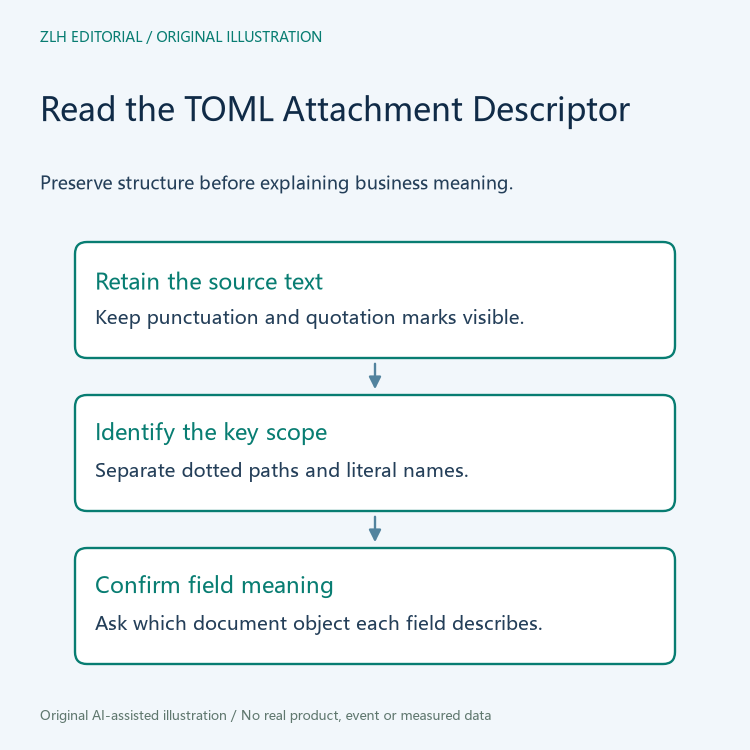
Keep structural paths apart from literal key names
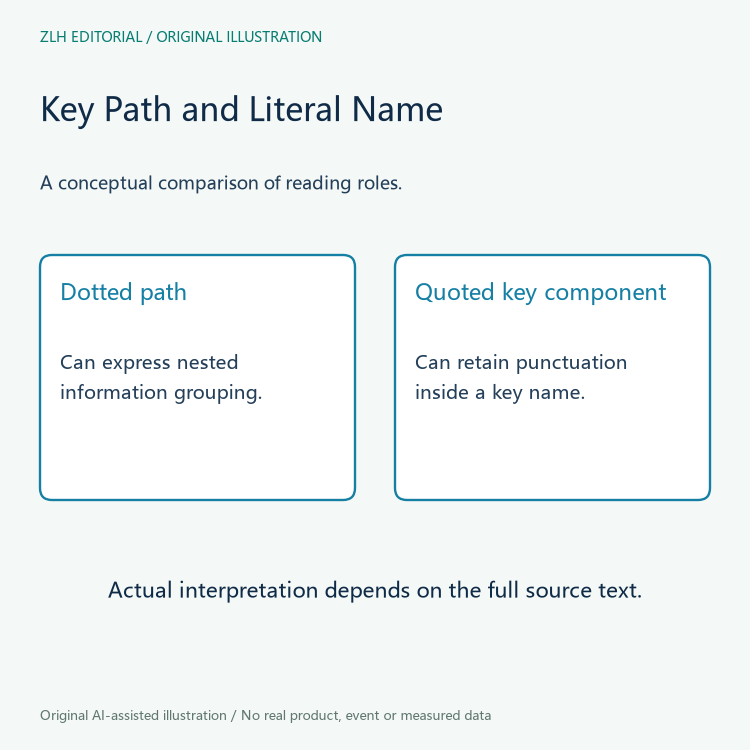
A dotted path and a key whose literal name contains punctuation can look similar in a quick visual scan. Instead of immediately renaming either one, preserve the exact text around it. Include quotation marks in the retained source excerpt where they affect interpretation. The purpose is to give the next reader enough context to understand why two labels should not yet be merged.
For a proposed descriptor review, explain the difference in words before converting it into a table. One reading describes a relationship between nested pieces of information; the other may describe a single name. That explanation is limited to the syntax actually present. It does not establish that a particular inventory item exists, that an attached certificate is authentic or that the seller created the descriptor. Those are separate documentary and business questions.
Read a parser's output in its documented context
The current Python tomllib documentation describes parsing TOML into Python objects, with tables represented as dictionaries. It also states that the module does not write TOML. The current page records TOML 1.1.0 support in Python 3.15, whereas the separately cited specification is version 1.0.0. Preserve that difference rather than claiming that the two source labels identify one identical release context.
If a supplier gives a parsed view, ask which tool and version produced it and how the result relates to the retained original. A dictionary display can help explain the interpretation, but it is not a replacement for the source document. Similarly, a request to revise the descriptor should identify who will produce the revision; citing a reading interface does not show that an edited file has been written or approved.
Review a fictional attachment index without changing it
Imagine a fictional used-equipment package containing a manual index and a TOML descriptor. A colleague copies two similar-looking keys into one spreadsheet column called “document version.” The original descriptor remains available, but the spreadsheet no longer shows whether the entries came from different paths. A reviewer can identify the lost association without inventing a real machine or a disputed sale.
The proposed response is to retain both original paths and ask the package owner what each field describes. One may concern the index while another concerns an individual attachment; the evidence in this example does not settle that meaning. A successful syntax reading would not supply the missing business definition. If the owner sends a correction, preserve it with the revised descriptor instead of overwriting the first record and losing the reason for the question.
Close the reading task at the right boundary
A bounded conclusion could state that the descriptor's key paths are now represented distinctly in the review note, while the objects described by two version fields still need confirmation. That is more useful than marking the whole package “verified.” It tells a receiving colleague what was clarified and which question remains for the document owner. No actual parser execution or file conversion has been performed in this article.
The site's reference category and related-information category offer further navigation. Use them to continue the documentation discussion, rather than as evidence for an individual sale. When a descriptor or receiving format changes, recheck the path-to-object association. Keeping source text, interpreted structure and transaction meaning visible helps prevent a convenient display label from becoming an unsupported claim about the equipment package.


