

Used Robot Filenames: Case Rules Need Directory Context
2026-11-04
Used Robot Filenames: Case Rules Need Directory Context
Used Robot Filenames can look almost identical while leaving an attachment register ambiguous. A seller may list ReportCedar and reportcedar as separate names, or a recipient may treat them as one entry. Neither conclusion should be based only on how similar the words look. The reader needs the original spelling and the environment in which the name was interpreted. This article reads Microsoft and Python documentation and reviews a fictional equipment-document package. It does not rename, merge, delete or open transaction attachments.
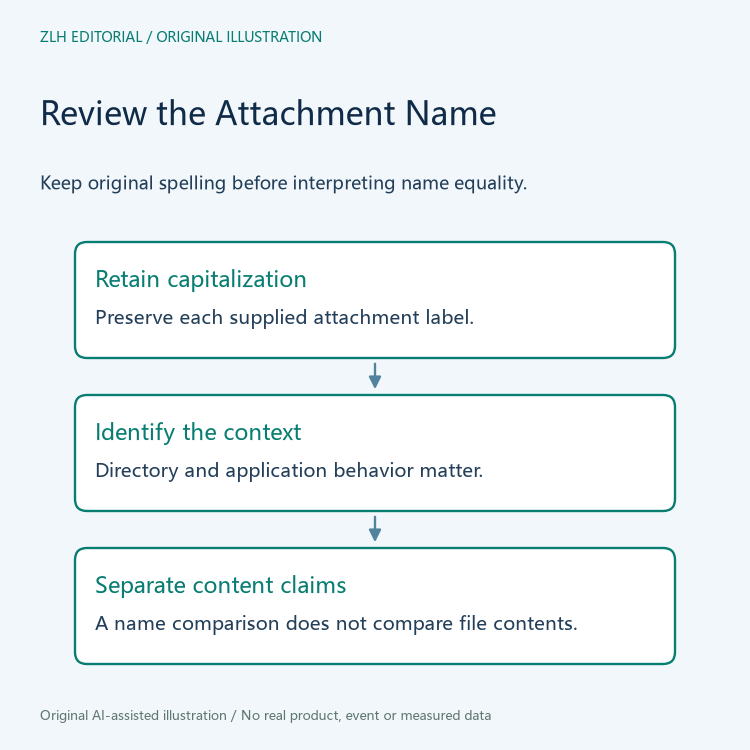
Retain the spelling before deciding what it means
Microsoft's case-sensitivity documentation explains the distinction between treating uppercase and lowercase names as equivalent and treating them as distinct. It also discusses standard Windows and Linux behavior and Windows support for a directory-specific case-sensitivity flag. A handover note should preserve those qualifications instead of reducing them to “Windows always ignores case.”
A proposed attachment register can retain each name exactly as the contributor supplied it. If the package contains two differently capitalized names, record both as supplied labels while asking how they relate. Do not lowercase the register for presentation and then claim that the original package contained only one name. That editorial transformation would remove the distinction before the reviewer had enough context to explain it.
Keep directory behavior separate from a general platform label
A platform name can be useful context, but it may not completely describe how a particular directory or application handles filenames. The Microsoft guidance makes the directory qualification especially relevant in mixed Windows and Linux work. For a document review, ask the contributor which environment and directory context the attachment account concerns. The reviewer should not change those settings as part of clarifying a register.
If that context is unavailable, state the uncertainty. A screenshot of a file list can preserve displayed spelling, but it does not establish every rule applied by the receiving software. Likewise, the fact that a seller says an archive was prepared on one platform does not fully explain what happened after it was copied elsewhere. Keep the supplied origin and the later interpretation recognizable as separate parts of the account.
Do not mistake a pure-path comparison for a disk observation
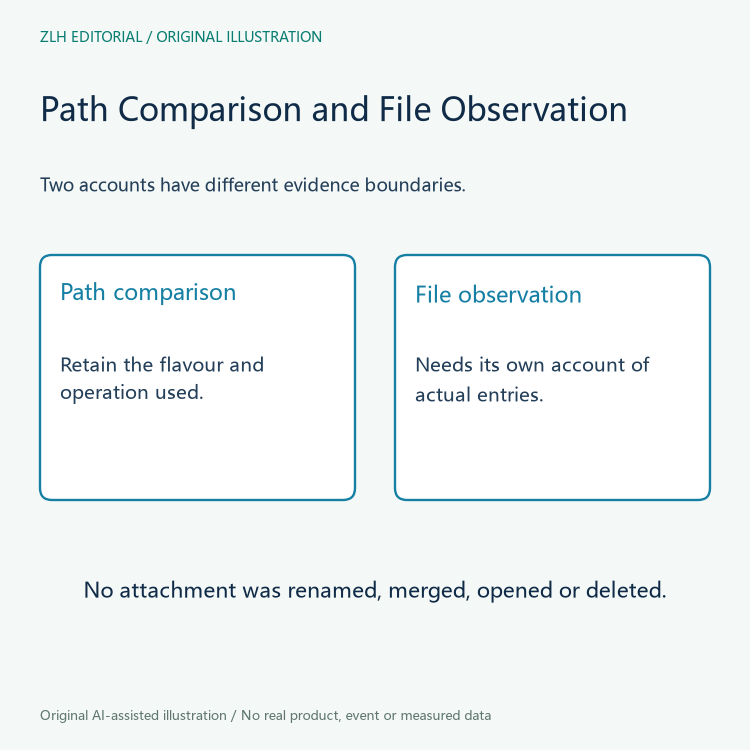
Python's official pathlib general-properties documentation explains that comparisons respect the case-folding semantics of the path flavour. The same reference distinguishes pure path operations from filesystem access. This makes a useful second boundary: a computational comparison of path objects is not an observation that two actual disk entries contain the same document.
If a contributor cites a path comparison to explain a register, ask which path flavour and operation were used. Keep that explanation within its actual scope. Do not describe a successful-looking comparison as a completed attachment-content check or a demonstrated match on the recipient's disk. This article executes no path comparison and makes no assertion about actual files; it explains the information a reader would need to interpret such a claim.
Review a fictional pair of differently capitalized names
Imagine a fictional used-robot packet called Cedar Records. Its inventory contains two names that differ only in capitalization. A local summary merges them into one line and labels the result “duplicate removed,” but gives no directory context, content comparison or contributor explanation. The document reviewer can identify the unsupported conclusion without altering the packet or deciding which item should be kept.
A useful clarification restores the supplied spellings and asks whether the contributor intended separate attachments, alternate labels or a corrected reference. If the answer relies on a particular environment, retain that context. If the contributor supplies a separate content-comparison account, identify that as additional evidence. A statement about filename interpretation should not silently stand in for a statement about document contents.
When a revised inventory arrives, describe what changed. A corrected name is a change to the reference; a replacement attachment is a changed input; a new explanation is new context. Preserving these differences allows another recipient to follow the handover history. It also avoids presenting an editorial normalization step as a recovery or deduplication operation that the reviewer never performed.
Close the naming question with the remaining limits explicit
A bounded conclusion can say that original capitalization is retained, the stated directory or comparison context is recorded, and unresolved attachment relationships remain visible. It should not say that the package has been deduplicated, that files are interchangeable or that every recipient will interpret the names identically.
The site's reference category and related-information category provide further navigation. When attachments move to a different environment or the contributor changes the names, revisit the relevant register entries. Exact spelling is useful evidence, but its interpretation needs the context that the source account actually supplies.


