

Used Robot FAQ: A Program State Is Not a Completed Task
2026-11-05
Used Robot FAQ: A Program State Is Not a Completed Task
Can a screenshot showing a running program prove that a used robot completed the offered demonstration? A Used Robot FAQ should treat that as an evidence question with several parts. A program-state field identifies a described state; a demonstration account describes a task and what was observed. The two can be connected, but the connection needs an explanation. This article reads the Universal Robots RTDE references and uses a fictional transaction packet. It performs no robot operation, data capture or purchase.
What does runtime_state identify in the reference?
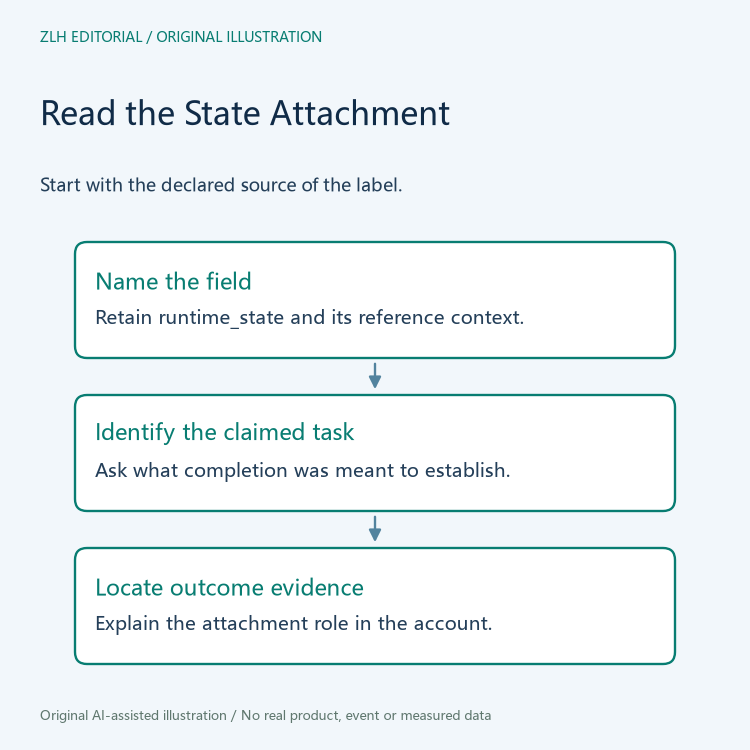
The official RTDE guide lists runtime_state among the controller output fields and links it to Program State. The inspected constants section explicitly applies to software versions 10.12.0, 5.25.0 and later. Its labels describe program states, including running, paused and stopped. That is a defined vocabulary for a field, not a description of a seller's offered task.
A transaction reviewer should retain the original field name and the contributor's software context before repeating a state label. If a listing says “running” without identifying its source, ask whether it is a field interpretation, an interface caption or ordinary prose. Those possibilities have different evidentiary roles. A familiar word alone cannot establish how an attachment was produced or which machine it concerns.
Why does a state snapshot leave the task result open?
A snapshot is limited by the event it purports to show. Even if its source and interpretation are well explained, it does not automatically identify the beginning, completion criteria or observed outcome of the offered demonstration. Those details belong in the demonstration account. This is an editorial evidence distinction, not a technical assertion about what any actual machine did.
Ask the seller to identify the proposed task in ordinary language and explain which submitted material supports each claimed outcome. The response should name the relevant equipment and the boundaries of the observation. A reviewer can then assess whether the state attachment has a stated role in that account. The attachment might document context without documenting completion, and that narrower role can still be useful.
What should accompany an exported field heading?
The official RTDE client-module reference describes configured variable names and types, along with a writer that uses those names for export headings. It offers a reason to preserve the submitted field heading rather than replacing it with a broad marketing caption. The reference is historical in its stated Python development environment; it is used here to explain the documented representation.
A contributor's export account should identify which material supplied the field and how the submitted excerpt relates to the claimed demonstration. The reviewer need not create a new export to ask that question. If only a cropped image is available, state that boundary. Do not infer an entire task sequence, unseen rows or a continuous observation from the visible portion of an attachment.
How would this apply to a fictional offer packet?
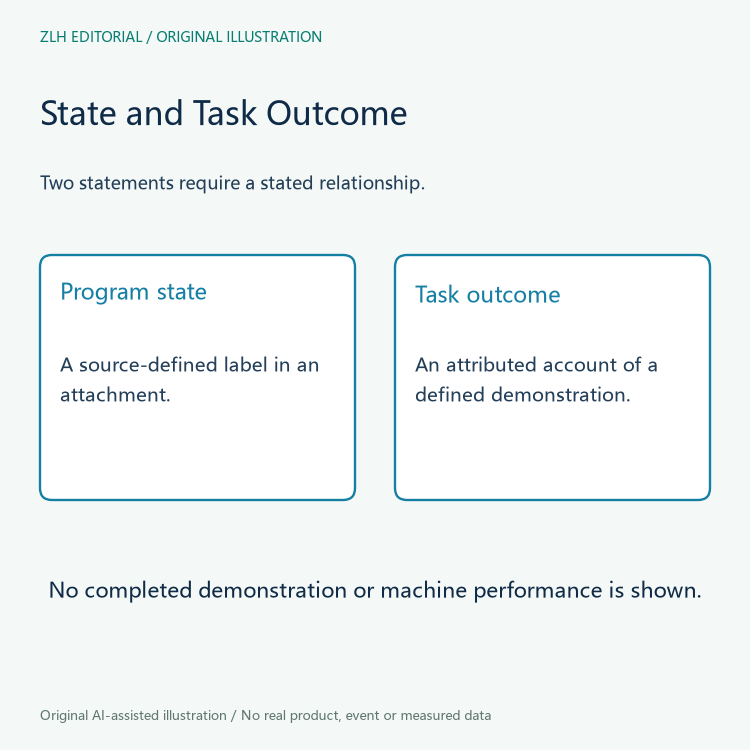
Suppose an explicitly fictional seller packet called Offer Hazel includes a state screenshot and a sentence saying that every demonstration objective was completed. It does not define those objectives or connect the screenshot to an observation account. The reviewer can identify two missing pieces: the claimed task outcome and the attachment's role. Neither gap can be filled merely by expanding the word “running.”
A revised packet might retain the screenshot as context and add an attributed demonstration narrative. The reviewer would then examine whether the narrative describes the offered task and its stated result. If it only repeats the screenshot caption, the result question remains unanswered. If it describes a different task, that mismatch should be retained rather than harmonized by changing the caption.
Likewise, a stopped label should not be rewritten as successful completion without supporting task evidence. The word identifies a state under the applicable reference; the transaction claim concerns what the demonstration established. An incomplete packet can be described accurately as incomplete. It does not justify declaring the equipment defective, suitable or unsuitable for the buyer's intended application.
What is a bounded document-review conclusion?
A useful conclusion states whether the packet identifies the source of the state attachment and separately explains the claimed demonstration outcome. It names unresolved questions and attributes any later seller explanation. It should not become a performance certificate, an authenticity guarantee or a purchase recommendation. Those conclusions require additional evidence and decisions beyond the meaning of one field.
The site's transaction-reference category and related-information category provide further reading. Keep the distinction when writing a short offer summary: a program-state attachment can support context, while a completed-task claim needs an account of the task. Clear wording allows the reader to understand what was actually supplied before making any further transaction judgment.


