

Used Robot Path Records: Blends and Waypoint Passage
2026-11-05
Used Robot Path Records: Blends and Waypoint Passage
Blends can change how a waypoint should be interpreted in a robot path record. A listed position is not automatically evidence that the robot stopped there or passed through that position exactly. Universal Robots illustrates blending as a transition between trajectories near an intermediate waypoint. A used-equipment handover should retain that context before describing a path as demonstrated. This article reads the manufacturer's explanation, without changing a blend radius, editing a program or running a robot.
Identify the waypoint statement that the offer makes
A path description can list positions, while a sales summary may add statements about arrival, stopping or clearance. Those additional words matter. The recipient should ask which supplied material supports each one. A list can help identify the intended path representation, but it is a different object from an observation of the robot's actual passage.
Keep the program or path record associated with the offered equipment and its software context. If the supplier only provides selected screenshots, preserve that observation range. A familiar waypoint name does not establish the complete configuration around it. The handover can identify missing context without alleging that a robot moved incorrectly or that the path is unsuitable.
Read the manufacturer's blending example precisely
The official SW5_19 Blending page explains a smooth transition between two trajectories without stopping at the waypoint between them. Its illustrated example allows the transition to take place near an intermediate waypoint without reaching it exactly. The example supplies a reason to avoid interpreting every listed waypoint as an exact-stop claim.
This is the manufacturer's explanatory example, not a reproduced trial. It should not be generalized into a statement that every waypoint is bypassed or that every blend produces the same physical path. The useful procurement implication is narrower: retain the blend context when asking what a particular waypoint statement means. The actual configuration still needs its own supporting material.
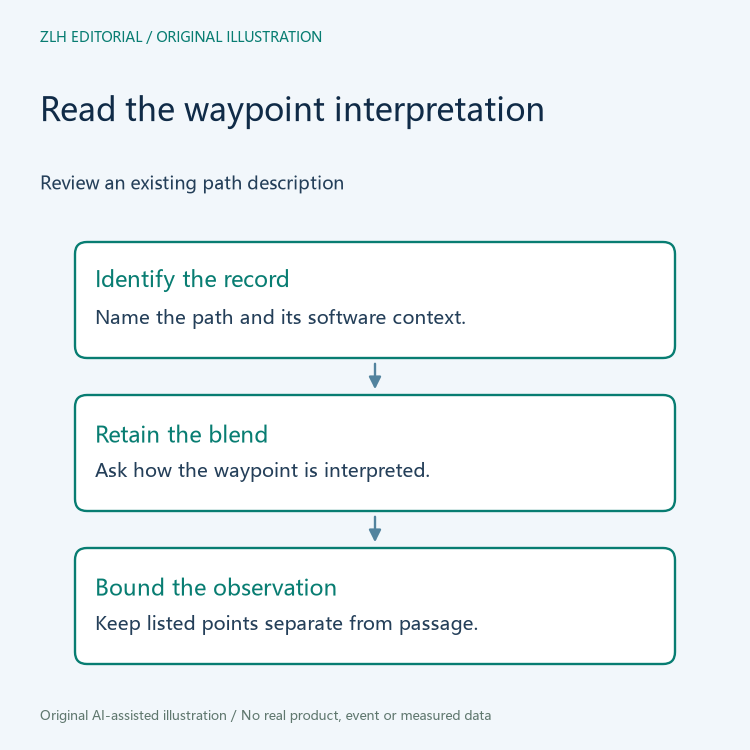
Keep the blend's documented context with the record
The official Blend Parameters page names several influences on the blend trajectory, including radius, speeds, movement time and the trajectory types on either side. A single value copied into a quotation does not preserve that entire description. Ask which configuration the supplied statement concerns.
The page also includes restrictions and a warning context for overlapping blends. This article does not provide a method for choosing a radius, adjusting a path or responding to a warning. The restrictions remain part of the manufacturer's applicable documentation. A handover reviewer should request the relevant source and responsible explanation rather than turn a vocabulary article into an editing instruction.
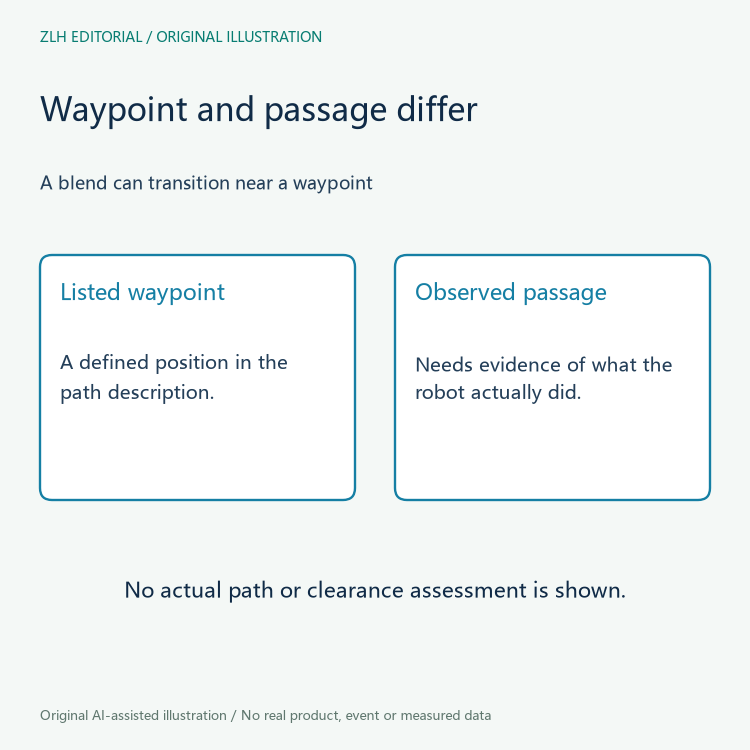
Review a fictional exact-arrival claim
Imagine a fictional seller's table listing several waypoints and a buyer's summary saying that the robot stops exactly at every listed location. The supplied table contains no explanation of blending or actual passage. The recipient should clarify the intended statement and ask for the missing configuration or observation context. This invented example contains no real robot, path coordinates or measured error.
The correction is to stop treating the representation as a completed observation. It does not require concluding that the robot failed to reach a required location. A required endpoint, an intermediate path description and an observed event can have different roles in the offer. Preserve those roles so the parties can discuss the same acceptance question.
Separate path interpretation from application assessment
Reading the blend context can clarify why a waypoint name does not imply a stop. It cannot establish obstacle clearance, application suitability or the current mechanical condition of a used robot. Those questions require the actual equipment, conditions and appropriate assessment evidence. This article supplies no operating demonstration or recommendation to execute a supplied path.
If a task description requires an observation at a position, make that requirement explicit in the enquiry. A transition near the position answers a different description from an observation made at that point. Ask which statement the offered example is intended to support and which material supports it. The wording of a document review should not silently change the required task, select a blend radius or turn a supplied model into a recommended operating path.
A useful handover conclusion names the record reviewed, identifies how blending was described and lists any unsupported passage or stopping statement. If the supplier later provides observation material, associate it with the same configuration rather than silently treating a different path as equivalent. An explanation that remains open about a missing observation is more useful than an invented successful arrival.
Both sources use the SW5_19 manual route and were read on November 5, 2026. The original illustrations contain no copied manufacturer trajectory, real path or clearance result. Related reading appears in the used robot handover collection and article directory. Keeping Blends beside the waypoint interpretation allows the buyer to distinguish what is listed, what is intended and what has actually been evidenced.


