

Used Lidar Time Records: System and Measurement Clocks
2026-11-05
Used Lidar Time Records: System and Measurement Clocks
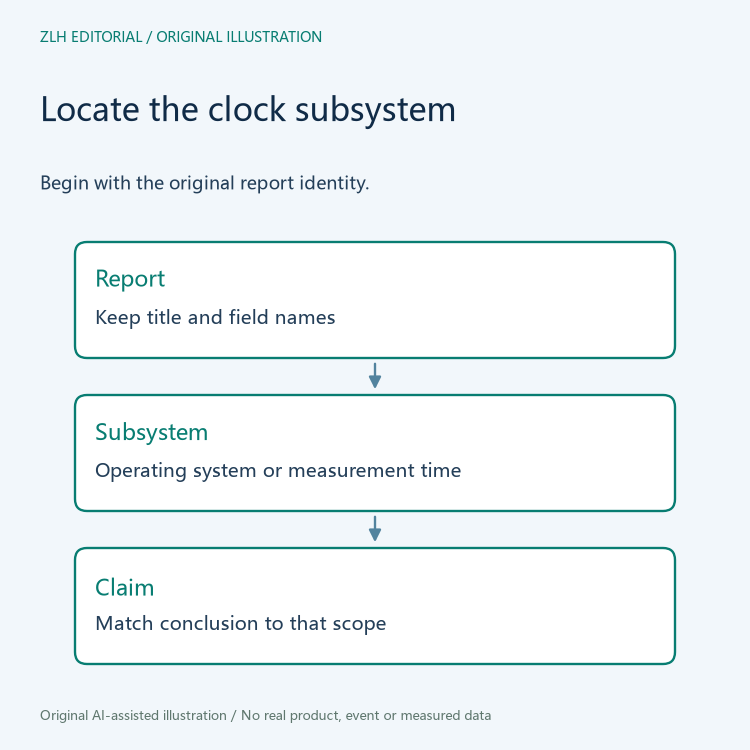
Lidar Time Records in a used robot accessory pack should identify the clock subsystem they describe. An operating-system status report and hardware measurement timestamps can appear near one another in an equipment folder while answering different questions. Ouster's firmware documentation makes this boundary explicit. This article reads the public version 4.0 documentation and a fictional handover pack. It contacts no sensor, issues no device request and changes no timing configuration.
Read the operating-system report within its stated scope
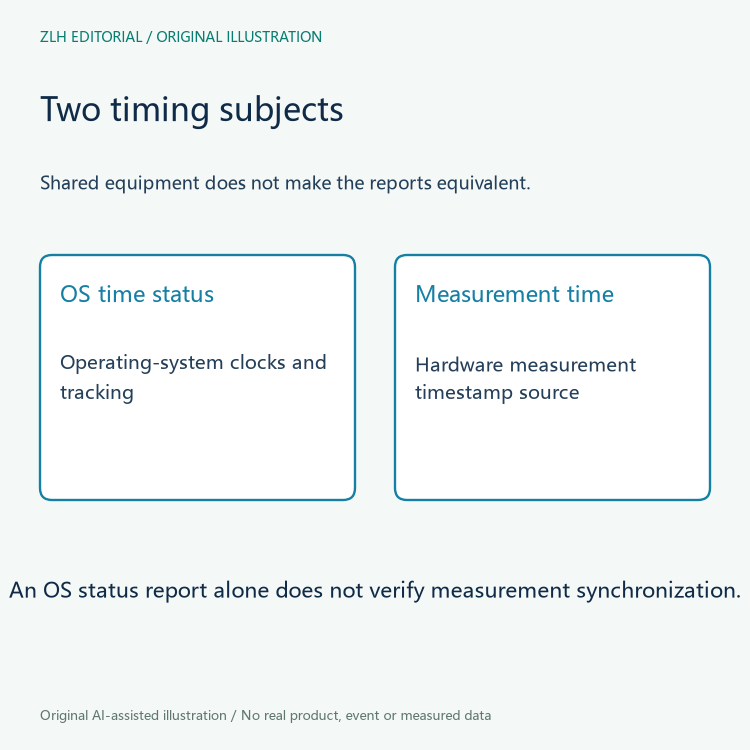
The official operating-system time-status reference describes the values associated with the sensor's operating-system clocks. It expressly distinguishes them from clocks related to hardware timestamp data from the lidar sensor. That qualification belongs in a handover summary, particularly when a seller's screenshot is labelled only time status.
The page describes monotonic and realtime fields and an operating-system synchronization-tracking object. Their names should remain attached to that subsystem. This article's question is the scope of the report, rather than a comparison of two general-purpose clock functions. A technically familiar field label does not remove the explicit boundary supplied by the manufacturer.
For a fictional used-accessory listing, suppose an appendix includes an operating-system tracking screenshot. A summary can accurately state that the screenshot concerns operating-system time tracking. It cannot use that fact alone to claim that hardware measurement timestamps were synchronized during a particular capture. The second claim needs material about the relevant measurement timing and capture.
Locate the measurement-timestamp source separately
The official Time Synchronization guide describes a common timer for lidar and IMU data and identifies the timestamp_mode setting as the source selection for measurement timestamps. It discusses an internal oscillator, an external synchronization input and PTP. These descriptions locate measurement timing in its own documented account.
The guide explains different behavior for the named sources, including conditions affecting externally synchronized time. An equipment editor should therefore preserve the applicable source description instead of reducing every number to a generic calendar timestamp. This is documentation reading, with no configuration values selected and no suggestion to reproduce the guide's commands on a device.
Do not transfer one subsystem's status to another
The decisive inference limit is simple: a record explicitly scoped to operating-system clocks does not by itself establish a result about hardware measurement timestamp clocks. A matching-looking time value would not erase that limit. The supplied material needs to identify what was reported and how it relates to the capture being discussed.
If the fictional seller also supplies a measurement-time report, keep its identity and context beside it. Do not silently merge the reports into one time verified field. That combined label would hide whether the evidence addressed operating-system tracking, measurement-source selection, an observed synchronization condition or a different question entirely. Each statement should remain traceable to the appropriate record.
A source-selection label is also different from an observation that an external timing relationship held throughout a capture. The public manual explains the modes; it does not witness the particular handover. If the actual capture relationship is unsupported, describe it as unestablished in the supplied pack rather than declaring a fault or assuming success.
Preserve source version and evidence context
Both cited pages identify firmware version 4.0 in the documentation read on November 5, 2026. A seller's equipment may have a different firmware context. The applicable documentation should be established before a summary treats the cited field descriptions as the exact interface of the offered unit. This article does not determine that firmware from an unknown screenshot.
A useful handover annotation preserves the report title, original field names, documented subsystem and association with the accessory and capture. If some of that context is absent, name the omission. An incomplete appendix is a documentation finding; it does not automatically show that the sensor clock malfunctioned or that the saved measurement data is unusable.
Keep the transaction conclusion proportionate
A buyer can ask the contributor to clarify which timing subsystem each supplied record concerns and what supports any measurement-synchronization claim. The response should identify its evidence rather than merely repeat that the device has time synchronization features. Capability descriptions and a specific retained timing record remain different kinds of material.
If a later revision corrects a heading from measurement timing to operating-system tracking, retain why the wording changed. That editorial correction does not establish that the hardware was reconfigured or that a new capture occurred. Both events would need their own account if they were relevant to the transaction.
The original illustrations contain no real sensor addresses, observed clock values or synchronization measurements. Related material appears in the robot accessory records category and technical reference category. Lidar Time Records become easier to review when operating-system status and measurement timestamp evidence retain their own documented subjects.


